
We Are Facing a Leadership Capacity Gap: The Risk No One Is Talking About

Image generated using Canva AI
Rapid change has outpaced human capacity. AI is not the issue. People’s ability to adapt is. Well-being practices that use sound, creativity, and mindful attention build the neural flexibility that makes technology investments pay off.
Leaders and their senior teams are at a tipping point.
According to the latest Ragan and HarrisX survey, CEOs anticipate three to four major organizational shifts in the next two years, and this pace is 50 percent more than what employees can absorb. AI is compounding the pressure. Technology only creates value when people have the cognitive and emotional capacity to adapt. Teams require practices that strengthen the brain’s ability to learn, focus, and stay receptive during change. This is why well-being is a prerequisite for tech effectiveness, not a perk.
“When leaders expect three to four major shifts in two years, but teams can only absorb two, pressure compounds quickly. The gap between change and capacity is where burnout begins.”
Managers need intentional frameworks to support mindful communication and stress management. Without them, transformation pushes teams past their limits. How leaders support themselves becomes the blueprint their people follow. Repeatable habits strengthen adaptability and prevent stress from spreading through the organization.
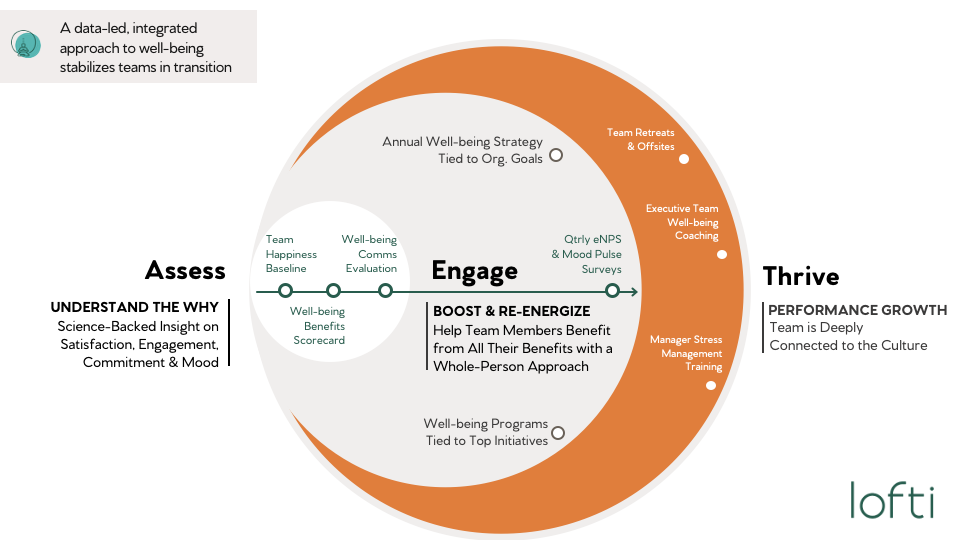
Lofti well-being framework, 2025
A data-led, integrated approach to well-being stabilizes teams in transition and reduces burnout. When leaders prioritize their own recovery, they signal permission for their teams to do the same. Ignoring these indicators carries a cost. The World Health Organization estimates that 12 billion working days are lost each year to depression and anxiety, at a cost of one trillion dollars globally. Both numbers continue to rise as the pace and pressure increase.
Traditional well-being programs focus on benefits that fewer than half of employees use. This creates a silent gap inside organizations that leaders often miss until burnout is visible. In my work with executives, I see how pressing responsibilities and work-first habits lead people to cope rather than care for themselves. When leaders operate without rest or boundaries, their teams mirror that behavior.
Why This Matters Now
Last month at Future of Communications in Austin, I was with more than 500 global leaders and held a series of one-on-one wellness coaching sessions. The themes were consistent:
Lunch rarely happens, and if it does, it is rushed
Breaks are non-existent, not even five minutes to breathe or stand
Sleep is inconsistent, and many women wake early with work on their minds
Workouts are irregular, even for lifelong exercisers
Many have tried meditation, but feel unsure how to use it during the workday
These are high performers at global Fortune 500 companies. Burnout is approaching quickly. When leaders operate without rest or boundaries, their teams follow the same patterns. Burnout becomes contagious.
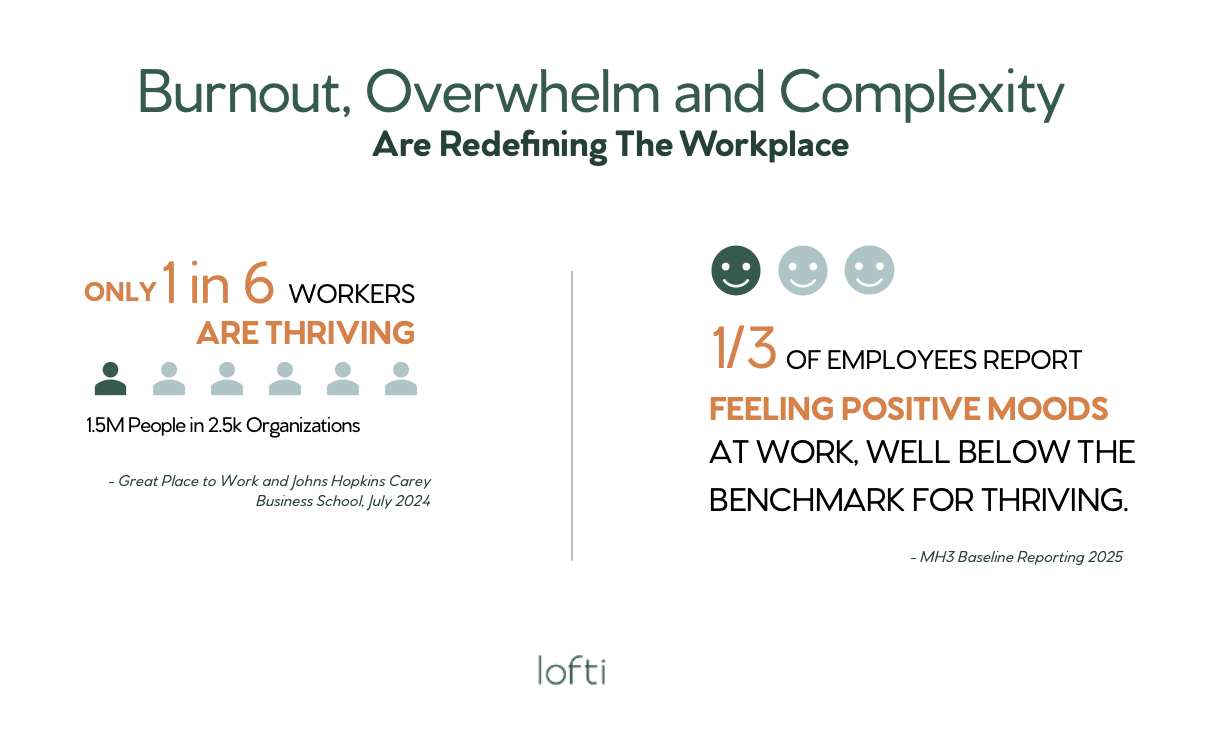
The scale of burnout and strain in the workplace
What Leaders Can Do Now
In my work with the American Institute of Preventive Medicine, the data is consistent. Workplaces with happier employees see 45 percent greater productivity, a 37 percent increase in sales, and 85 percent less burnout. In cultures where employees are struggling and disengaged, it’s not because they do not care. It is because they are exhausted.
A workplace that aims for better decision-making, innovation, creativity, and sustainable growth begins with understanding what people experience day to day. Leaders need data that is timely, relevant, and directly tied to the needs and opinions of their teams. Real-time insights create real-time opportunities to support people before burnout takes hold and adaptability declines.
This is the moment for leaders to demonstrate the habits that create clarity, calm, and capacity for their teams.
Organizations need to treat well-being as a foundational strategy, integrated into the rhythm of work rather than an add-on. Embedding this work as an operational discipline requires alignment across leadership levels. Executives and senior managers play different but equally critical roles. Organizations that want to build resilience and sustain performance during continuous change need to focus on four things.
#1: Use real-time insights to guide decisions and strengthen clarity
Leaders need immediate visibility into how their teams are feeling and what is creating pressure day to day. Real-time data helps executives and managers choose the right message, approach, and integration of well-being to keep teams grounded and reduce reactivity. These insights also strengthen adaptability, which is essential as AI requires new skills, new workflows, and a more flexible mindset.
#2: Train managers in stress management and mindful communication
Managers carry the operational weight of culture. They need tools that help them recognize their limits, process stress, and communicate clearly during heavy workflow. Small resets, mindful communication techniques, and brief check-ins shift team dynamics quickly when they are modeled and reinforced consistently.
#3: Create dedicated time and space to recalibrate team energy and focus
Team offsites and guided sessions that reset capacity, rebuild connection, and clarify priorities are essential. These moments allow leaders and teams to step out of urgency, examine habits, and return with a more sustainable pace and mindset.
#4: Build adaptive capacity through small, consistent well-being practices
Mindfulness, breathwork, sound, creativity, and micro-resets strengthen the brain regions responsible for learning, focus, and cognitive flexibility. These practices create a steady baseline in the nervous system, improving problem-solving and reducing reactivity.
As AI accelerates the pace of work, human capacity becomes the true differentiator. Organizations that embed well-being into daily leadership build teams that learn faster, adapt quickly, and stay resilient through continuous transformation.
About Karianne Michelle:
Karianne Michelle has spent two decades supporting C-level leaders and their teams — as a brand strategist for global companies such as State Farm, GE, Abbott, Proctor & Gamble, and Hewlett-Packard, and as a well-being expert helping some of the fastest-growing startups and Fortune-level organizations across the U.S., London, and Africa as they unlock greater self-awareness. Her well-being training and certifications include Yoga 200hr, iRest Yoga Nidra Meditation, Qigong, Reiki Master Teacher Trainer and Sound Healing. She currently serves as a sound bath artist for the UVA Contemplative Sciences Center, Wellness Coach for Ragan Communication's Leadership Council and well-being community leader for the Oprah Daily Insider community.
Ready to learn more? Connect with Karianne on LinkedIn.